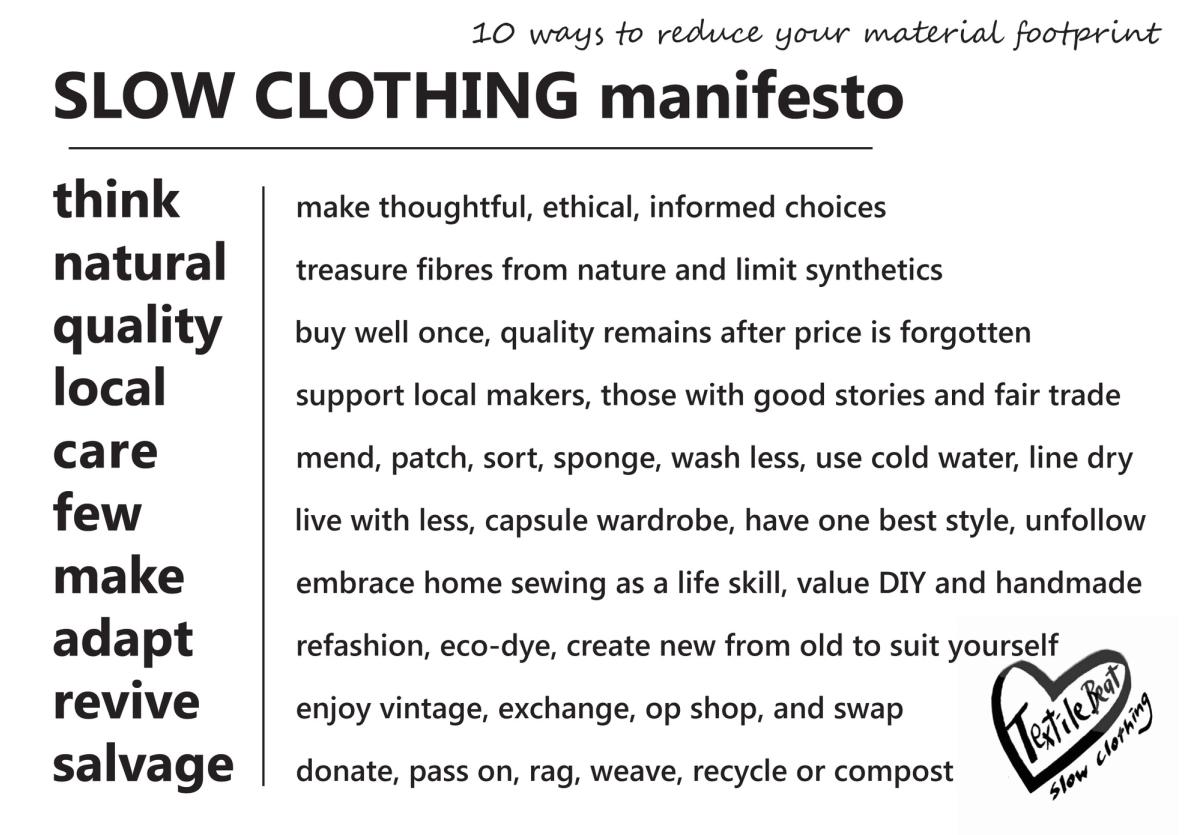
10 ways to reduce your material footprint
think – make thoughtful, ethical, informed choices
natural – treasure fibres from nature and limit synthetics
quality – buy well once, quality remains after price is forgotten
local – support local makers, those with good stories and fair trade
care – mend, patch, sort, sponge, wash less, use cold water, line dry
few – live with less, capsule wardrobe, have one best style, unfollow
make – embrace home sewing as a life skill, value DIY and handmade
adapt – refashion, eco-dye, create new from old to suit yourself
revive – enjoy vintage, exchange, op shop, and swap
salvage – donate, pass on, rag, weave, recycle or compost
The Slow Clothing Manifesto is a list of ten ways to reduce your material footprint by the Australian author and sustainability advocate Jane Milburn, published through her social enterprise Textile Beat. Textile Beat first posted a slow clothing manifesto in July 2015 and kept refining it; earlier versions had fewer principles, and the ten-point version shown here was in use by 2016.
It favours natural fibres, quality, local makers, mending, home sewing, swapping and reuse over buying more, and its ideas fed into Milburn’s 2017 book Slow Clothing: Finding meaning in what we wear.