1. Eat lots of animals, insects, and plants.
Focus on quality sources of protein (all forms of meat, fowl, fish), colorful vegetables, some select fruits (mostly berries), and healthy fats (avocado and olive products, nuts, full-fat dairy if tolerated). Observe portion control (calorie distribution) week to week more than meal to meal.
2. Avoid poisonous things.
Avoid exposure to chemical toxins in your food (pesticides, herbicides, fungicides) and on your skin. But also try to avoid the hidden health disruptors in foods, like sugars, grains, processed foods, trans and hydrogenated fats, and mercury in certain fish.
3. Move around a lot (mostly at a slow pace).
Humans need to move. Walk as much as possible, every day. Build your aerobic capacity by doing some form of low-level aerobic activity 2 to 5 hours a week, whether it is walking (in an exercise context), hiking, easy bike riding, or swimming. Ideally, and when possible, find time to go barefoot or wear as little foot support as possible.
4. Lift heavy things.
Your muscles, joints, and skeletal system are designed for pushing, pulling, hoisting, tugging, climbing, and carrying. Spend 30 to 45 minutes, two or three times a week, lifting heavy things. That could mean free weights, resistance bands, sandbags, kettlebells, body weight, machines at the gym—anything that requires you to move weight around. Focus on movements that involve the entire body and in wider ranges of motion, not just on isolating body parts.
5. Run really fast every once in a while.
Do some form of intense anaerobic sprint bursts occasionally. This could be as simple as six or eight short sprints up a hill, on the grass, or at the beach, or repeated intense sessions on a stationary bike or other gym equipment.
6. Get lots of sleep.
Our lives are so hectic and full of things to do after the sun goes down that it’s often difficult to get enough sleep. Yet sleep is one of the most important factors in maintaining good health, vibrant energy, and a strong immune system. Prioritize getting the ZZZs you need.
7. Play.
Spend some time each week—each day, if possible—involved in active play. In addition to allowing you to apply your fitness outside the gym, play lets you flex your creativity and helps dissipate some of the negative effects of the chronic stress hormones you’ve been accumulating through the week.
8. Get some sunlight every day.
Contrary to the conventional wisdom dispensed by dermatologists (who suggest you shun the sun), the Primal Blueprint insists that you get some direct sunlight every day. Certainly not so much that you come close to burning, but definitely enough to prompt your body to make the all-important vitamin D and to support the mood-lifting benefits.
9. Avoid stupid mistakes.
Eliminate self-destructive behaviors. These concepts are self-evident to most people (wear seat belts, don’t smoke or do drugs, don’t dive into shallow water), yet so many of us live our lives oblivious to impending danger. Develop a keen sense of awareness of your surroundings.
10. Use your mind.
Exercise your brain daily, as our ancestors did. Be inventive, creative, and aware. If your work is not stimulating (or even if it is), find time to read, write, play an instrument, and interact socially.
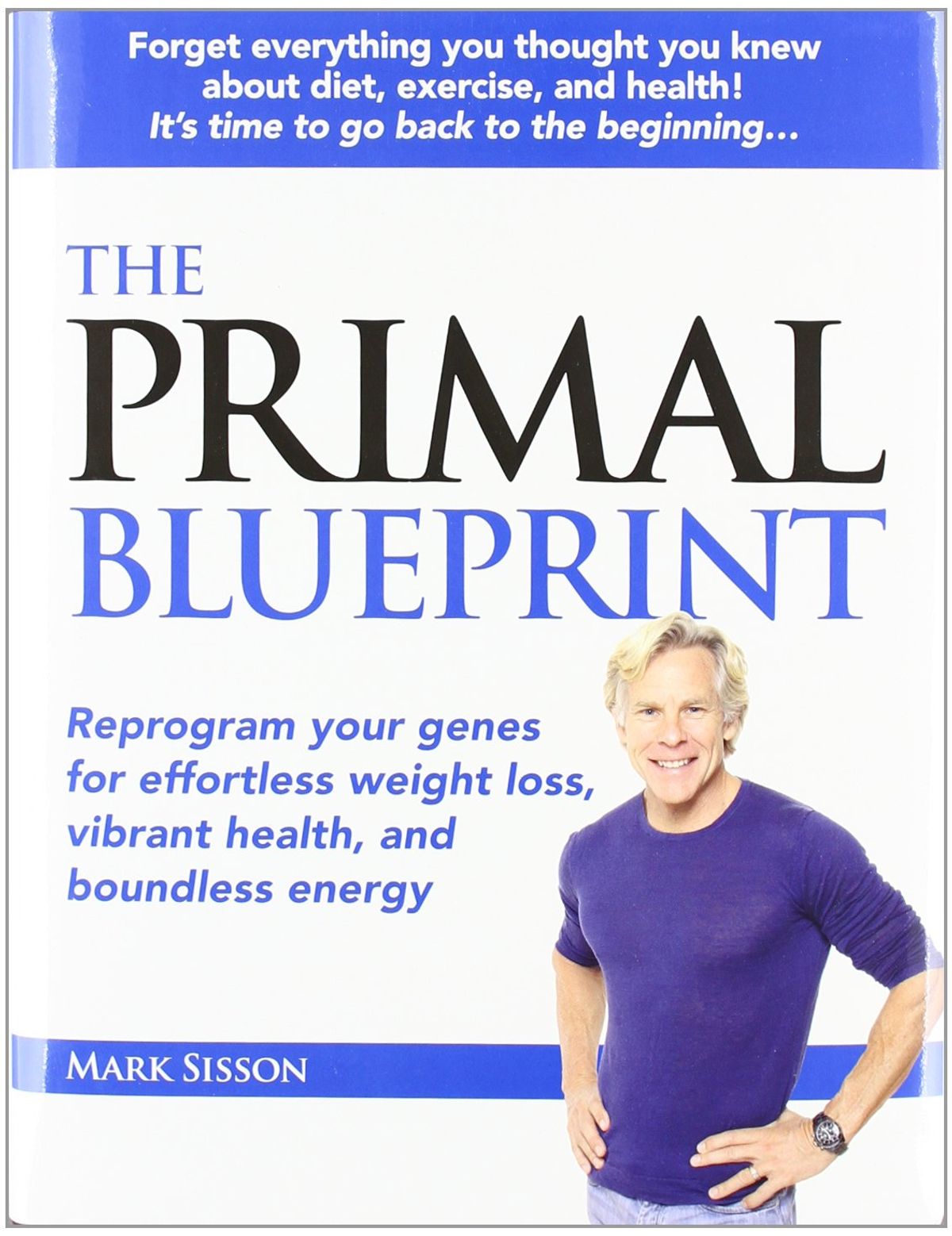
The Primal Blueprint is Mark Sisson’s set of ten “Primal Blueprint Laws” for adapting the habits of hunter-gatherer ancestors to modern life, first set out on his blog Mark’s Daily Apple and in his 2009 book The Primal Blueprint, published by his own company Primal Nutrition. Sisson, a former distance runner and triathlete turned fitness author, argues that diet, movement, sleep, sunlight and play shape how our genes express themselves. The laws urge eating plants and animals, avoiding “poisonous things” such as sugars, grains and processed foods, moving slowly but often, lifting heavy things, sprinting occasionally, and getting plenty of sleep, play and sunlight.
The book became one of the founding texts of the primal and paleo movement and was revised in 2016 as The New Primal Blueprint. The text here is the current version of the ten laws as Sisson publishes them on Mark’s Daily Apple; the first law, given in the 2009 book as “Eat lots of plants and animals”, now reads “Eat lots of animals, insects, and plants”.